
Car Engine
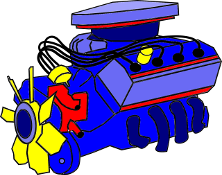
This full-page word search puzzle is themed. It hides 15 listed wordsAir Filter, Battery, Camshaft, Carburetor, Clutch,
Fan Belt, Flywheel, Fuel Line, Fuse Box, Gearbox,
Oil Filter, Piston, Radiator, Spark Plug, Thermostat related to the general theme of Car Engine in a large 22×20 letter grid. An additional 9 randomAlbino, Behead, Clown,
Fracas, Inch, Scour,
Sunbed, Tips, Virgin and unlisted words are also hidden in the grid. The solution is provided.
Fun Facts About Car Engines
- The very first gasoline-powered car engine (1885) produced just 0.75 horsepower. That's less than many modern electric toothbrushes!
- When a car engine runs, it mimics the breathing of living organisms. It first draws air through the intake system, like our mouth or nose. Its air filter is like our nasal hairs and lungs, filtering out dust, dirt and debris. The throttle controls the volume of air (throat and windpipe), while the intake manifold and pistons distribute air evenly to each cylinder (bronchi and inhalation). Finally, the combustion chamber mixes oxygen with fuel to generate power (lungs), while the exhaust manifold removes harmful fumes (exhalation).
- The world record for a complete engine swap is 42 seconds. It was set in 1985 by UK Royal Marines on a specially prepared Ford Escort during a televized TV show.
- The surface of car engines can get so hot, you can technically cook food on them. People have actually baked potatos and pizza under the hood on long drives. Now, that's what we call car-b-queing!
- At the 1900 Paris World's Fair, early diesel engines were demonstrated to run on peanut oil. It was envisioned that farmers would be growing their own fuel sometime in the near future.
- It is estimated that the average modern car engine converts only about 12–30% of gasoline's energy into actual motion. Roughly 70–88% of the energy becomes heat, noise, or exhaust.
- The invention of internal combustion preceded the modern automobile by about 10 years. In 1876, the Germans created the first practical four-stroke engine, which paved the way to the first true automobile in 1886 (also built in Germany).
The puzzle is printer-friendly. As long as your computer can open PDF files and your printer is loaded with standard 8.5" × 11" paper, you are all set to start solving.
Note: click the [direct link] below the embedded PDF file if you have trouble printing. The file should then directly download and open on your device. You can print it from there.