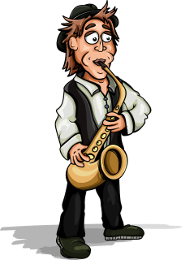
Jazz
This full-page word search puzzle is themed. It hides 15 listed wordsAfro-Cuban, Bebop, Big Band, Bossa Nova, Crossover,
Dixieland, Fusion, Gypsy, Hard Bop, Latin,
Orchestral, Ragtime, Smooth, Soul, Swing related to the general theme of Jazz in a large 22×20 letter grid. An additional 9 randomAttire, Crank, Eerie,
Fake, Oblige, Sorbet,
Tiny, Toad, Worry and unlisted words are also hidden in the grid. The solution is provided.
Fun Facts About Jazz
- New Orleans is widely recognized as the birthplace of jazz. It emerged at the turn of the 20th century as a vibrant mix of African rhythms, blues, ragtime, marching bands and French quadrilles.
- In contrast today where jazz is treated as a niche art form, back in the 1920s jazz was considered the hot music of the day, characterized by fast tempos, improvisation, and a sense of rebellion.
- Jazz musicians use complex, non-verbal communication on stage to direct performances, including subtle hand gestures, head nods, eye contact, or even foot taps to cue endings, key changes, solos, or transitions.
- It is said that you can boost your immune system and spark your creativity by just listening to jazz. Research indicates jazz activates theta brain waves, the same ones linked to deep relaxation, daydreaming, and innovative thinking.
- There are now over 40 distinct subgenres of jazz. The major ones are rooted in particular historical eras: early ragtime and Dixieland (1900s–20s), big band/swing (1930s), fast bebop (1940s), cool jazz and hard bop (1950s), and free jazz and fusion (1960s–70s).
- Jazz is often called "America's classical music" or its "greatest original art form" because of its deep roots in American history and its foundational emphasis on improvisation. Unlike traditional Western classical music where performers interpret a fixed score, jazz musicians compose the music in real time.
- Jazz introduced iconic American dances like the Charleston, Black Bottom, and Lindy Hop. Other, lesser known dances include the Shimmy, the Texas Tommy, the Cake Walk, the Big Apple, the Peabody, the Jitterbug and the Mess-Around.
- The term "hipster" originated in the 1940s Harlem jazz scene, not the 1960s hippie movement. It described fans and musicians who were "hip" (in the know) about bebop and cool jazz.
The puzzle is printer-friendly. As long as your computer can open PDF files and your printer is loaded with standard 8.5" × 11" paper, you are all set to start solving.
Note: click the [direct link] below the embedded PDF file if you have trouble printing. The file should then directly download and open on your device. You can print it from there.